✓ Verified · Reviewed datavaries by registry
Bouvier des Flandres
Herding breed from Belgium (Flanders region)
Breed overview
Reviewed · Database recordAbout the Bouvier des Flandres
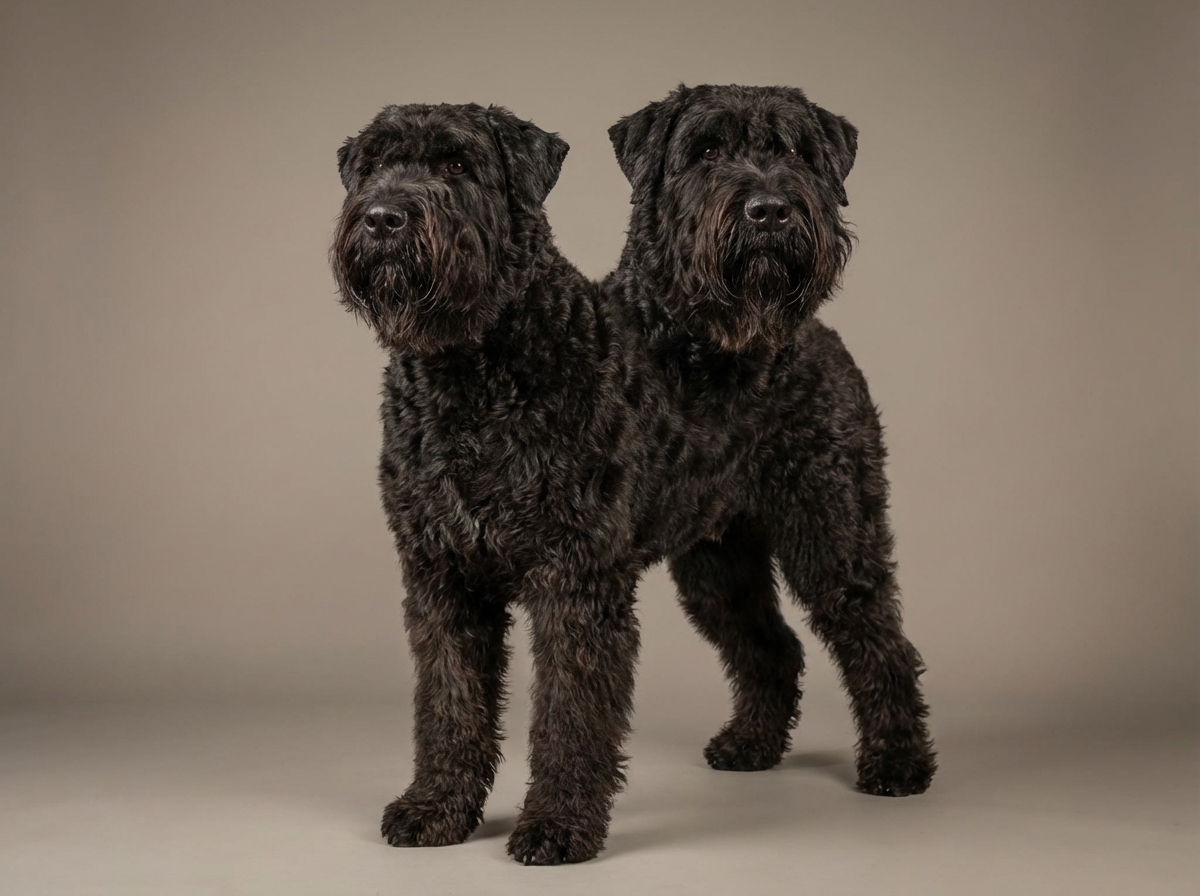
The Bouvier des Flandres is a large, powerfully built herding dog with a rugged appearance and a rough, tousled double coat. This compact breed gives the impression of great strength without heaviness and has a dense weather-resistant coat suited for farm work. Temperament traits include loyalty, intelligence, protectiveness, courage, calmness, and gentleness. Energy level is moderate (3/5), trainability is high (4/5), and grooming needs are high (4/5). Shedding is moderate (3/5). The breed is generally suitable with children (4/5) and moderately compatible with other dogs (3/5). Apartment suitability is low (2/5). All measurements are modelled estimates; actual individuals may vary.
Quick facts
Bouvier des Flandres at a glance
Sizelarge
Breed groupHerding
OriginBelgium (Flanders region)
Lifespan10–12 years
Male weight32–50 kilogram
Female weight32–50 kilogram
Male height62–70 centimetre
Female height62–70 centimetre
Origin and history
Where the breed comes from
The Bouvier des Flandres was developed in the Flanders region of Belgium. According to one account, it was developed by monks in medieval Europe as a cattle herding and all-purpose farm dog. It was used to drive cattle, pull carts, and serve as a watchdog. The breed was nearly extinct after World War I but was revived by dedicated breeders. The exact timeline and details of its early development are not fully documented, and the breed's recognition status varies by registry. The breed is classified in the Herding group.
Physical characteristics
Structured dataSize, build and coat
Female
32–50 kilogramAdult weight62–70 centimetreAdult heightCoat typesDouble, RoughCoat colorsPendingRecognitionvaries by registryData methodai assisted draft
Temperament
Typical breed tendencies
Loyalintelligentprotectivecourageouscalmgentle
Breed tendencies are general guidance. Individual behavior depends on genetics, socialization, training, health and environment.
Exercise, training and maintenance
1–5 methodologyDaily care profile
Moderate compared with other breeds
Typically responsive to training
Higher coat-maintenance demand
Moderate compared with other breeds
Family suitability
Home and household fit
Supervise every dog–child interaction.
Introductions and socialization still matter.
Exercise, enrichment and noise tolerance affect fit.
Climate suitability
Modelled tendency · medium confidence
Modelled tendency · medium confidence
Modelled tendency · medium confidence
A general morphology-based tendency. Individual dogs still require shade, shelter, water, acclimation and weather-appropriate activity. Method: climate-morphology-v1.
Health overview
Veterinary sources requiredHealth considerations
No Bouvier des Flandres-specific screening programme or peer-reviewed disorder-prevalence study is currently attached to this profile. This is not evidence that the breed has no health risks. Owners should use routine preventive veterinary care and discuss screening appropriate to the individual dog's history, examination and family line.
Feeding overview
Nutrition and feeding
Research in progress
Reviewed feeding guidance will appear after an approved source is imported and editorially reviewed.
Decision support
Potential advantages and challenges
Potential advantages
- Typically responsive to consistent training.Supported by trainabilityScore: 4
- Can be a strong family match when socialized and supervised.Supported by childSuitability: 4
- Commonly described as loyal.Supported by temperaments.loyal: true
Potential challenges
Similar breeds
Continue comparing
Related comparisons
Compare this breed
Growth chart
Bouvier des Flandres puppy growth
Modeled estimates
Open interactive chart From puppy weight to adult size
Compare male and female growth, check weight by age and estimate mature size.
Adult male weight32–50 kilogramAdult female weight32–50 kilogramGrowth modeladult-range-size-model-v1
Preview only. Open the complete chart to adjust age, current weight and measurement units.
Frequently asked questions
Common questions
What is the size and lifespan of a Bouvier des Flandres?
Based on modelled estimates, adult males and females both weigh between 32 and 50 kg and stand 62 to 70 cm tall at the shoulder. The estimated lifespan is 10 to 12 years. These figures are estimates; individual dogs may differ.
What is the temperament of a Bouvier des Flandres?
Commonly described temperaments include loyal, intelligent, protective, courageous, calm, and gentle. However, not every individual dog will display all these traits, and behavior depends on training, socialization, and environment.
How much exercise does a Bouvier des Flandres need?
The breed has a moderate energy level (scored 3 out of 5). Regular daily exercise is recommended, but exact needs vary by dog. They were historically used for farm work, so they benefit from activities that engage both body and mind.
What are the grooming requirements?
Grooming needs are high (scored 4 out of 5) due to the rough double coat. Regular brushing is necessary to prevent mats and manage moderate shedding (scored 3 out of 5). Professional grooming may be needed periodically.
Is a Bouvier des Flandres suitable for apartment living?
Apartment suitability is low (scored 2 out of 5). This large breed typically does best in a home with a yard. However, individual dogs may adapt if given sufficient exercise and space.
How does the Bouvier des Flandres get along with children and other dogs?
The breed generally scores well with children (4 out of 5) and moderately with other dogs (3 out of 5). Early socialization and training are important. Individual temperament can vary.
Where does the Bouvier des Flandres originate from?
The breed originates from the Flanders region of Belgium. It was developed as a herding and all-purpose farm dog, though specific historical details are not fully documented.
Data transparency
✓ Published · VerifiedSources and review status
APIThe Dog API ↗The Dog API Terms of Service (effective 2023-07-01)
VETERINARY SOURCEWSAVA Global Nutrition Guidelines and Toolkit ↗Copyright; factual citation and original summary only
Image source: The Dog API. Last reviewed 7/20/2026.