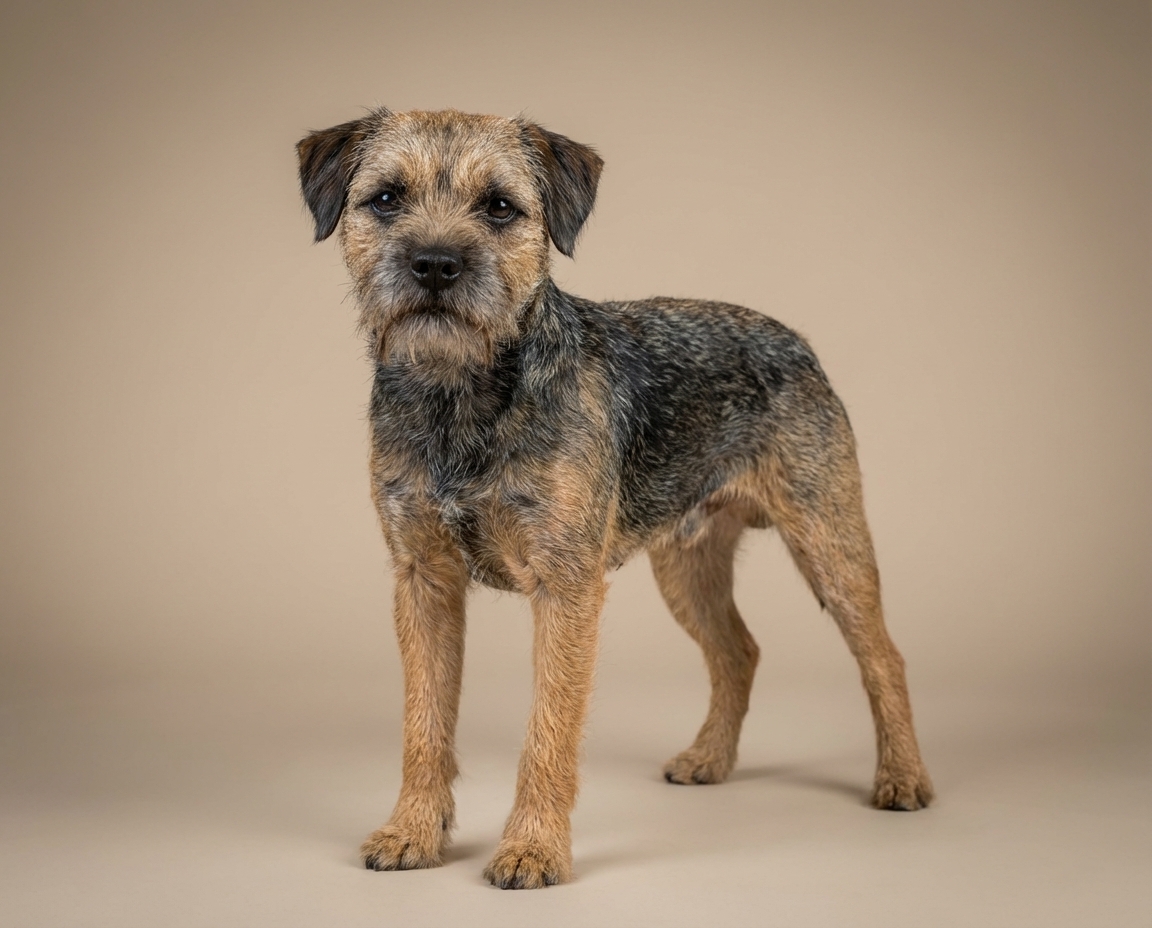
Terrier breed from Border regions between England and Scotland
The Border Terrier is a small, sturdy working terrier with a weather-resistant wiry coat and a distinctive otter-like head. It is described as affectionate, intelligent, alert, energetic, courageous, and adaptable. This breed belongs to the Terrier group and originates from the border regions between England and Scotland. Its recognition status varies by registry. Estimated adult weight for both males and females is 6–7 kg, and estimated adult height is 33–41 cm. The estimated lifespan is 12–15 years. Energy level is rated 4 out of 5, trainability 3 out of 5, grooming 3 out of 5, and shedding 2 out of 5. Suitability for children, other dogs, and apartment living are each rated 3 out of 5. Note that these scores are based on modelled estimates and may not reflect every individual dog.
The Border Terrier was developed in the 18th century in the Cheviot Hills along the English-Scottish border. It was bred by farmers and shepherds to hunt fox alongside foxhounds. The breed needed to be small enough to follow quarry into dens and burrows but tough enough to keep up with horses and work independently. Its origins are specifically tied to the border regions between England and Scotland. Today, the Border Terrier is recognized as a distinct breed, though its recognition status varies by registry. It is classified in the Terrier group and is known for its wiry coat and otter-like head. The breed's history as a working terrier has shaped its temperament, which includes courage, adaptability, and alertness. However, exact historical details beyond the 18th-century development are not specified in the available facts.
Breed tendencies are general guidance. Individual behavior depends on genetics, socialization, training, health and environment.
Higher daily exercise demand
Moderate compared with other breeds
Lower shedding tendency
Supervise every dog–child interaction.
Introductions and socialization still matter.
Exercise, enrichment and noise tolerance affect fit.
Modelled tendency · low confidence
A general morphology-based tendency. Individual dogs still require shade, shelter, water, acclimation and weather-appropriate activity. Method: climate-morphology-v1.
No Border Terrier-specific screening programme or peer-reviewed disorder-prevalence study is currently attached to this profile. This is not evidence that the breed has no health risks. Owners should use routine preventive veterinary care and discuss screening appropriate to the individual dog's history, examination and family line.
Veterinary disclaimer: This profile is educational and does not replace examination, diagnosis or treatment by a veterinarian.
Reviewed feeding guidance will appear after an approved source is imported and editorially reviewed.
Compare male and female growth, check weight by age and estimate mature size.
Preview only. Open the complete chart to adjust age, current weight and measurement units.
The Border Terrier is a small breed. Estimated adult weight for both males and females is 6–7 kg, and estimated adult height is 33–41 cm. The estimated lifespan is 12–15 years. These are modelled estimates and may vary.
Border Terriers are described as affectionate, intelligent, alert, energetic, courageous, and adaptable. However, individual dogs may vary, and not every Border Terrier will display all these traits equally.
The breed has an energy score of 4 out of 5, indicating a high energy level. Regular exercise is important, but specific exercise requirements are not detailed in the available facts.
The Border Terrier has a wiry coat and a grooming score of 3 out of 5. Shedding is rated 2 out of 5, suggesting moderate grooming needs. Specific grooming routines are not provided.
Child suitability and dog compatibility are both rated 3 out of 5, indicating average suitability. However, individual temperaments vary, so supervision and proper introductions are recommended.
Apartment suitability is rated 3 out of 5, suggesting it may be possible with sufficient exercise. The breed's energy level is high, so access to regular activity is important.
The Border Terrier originates from the border regions between England and Scotland. It was developed in the 18th century in the Cheviot Hills by farmers and shepherds for fox hunting.
Image source: The Dog API. Last reviewed 7/20/2026.