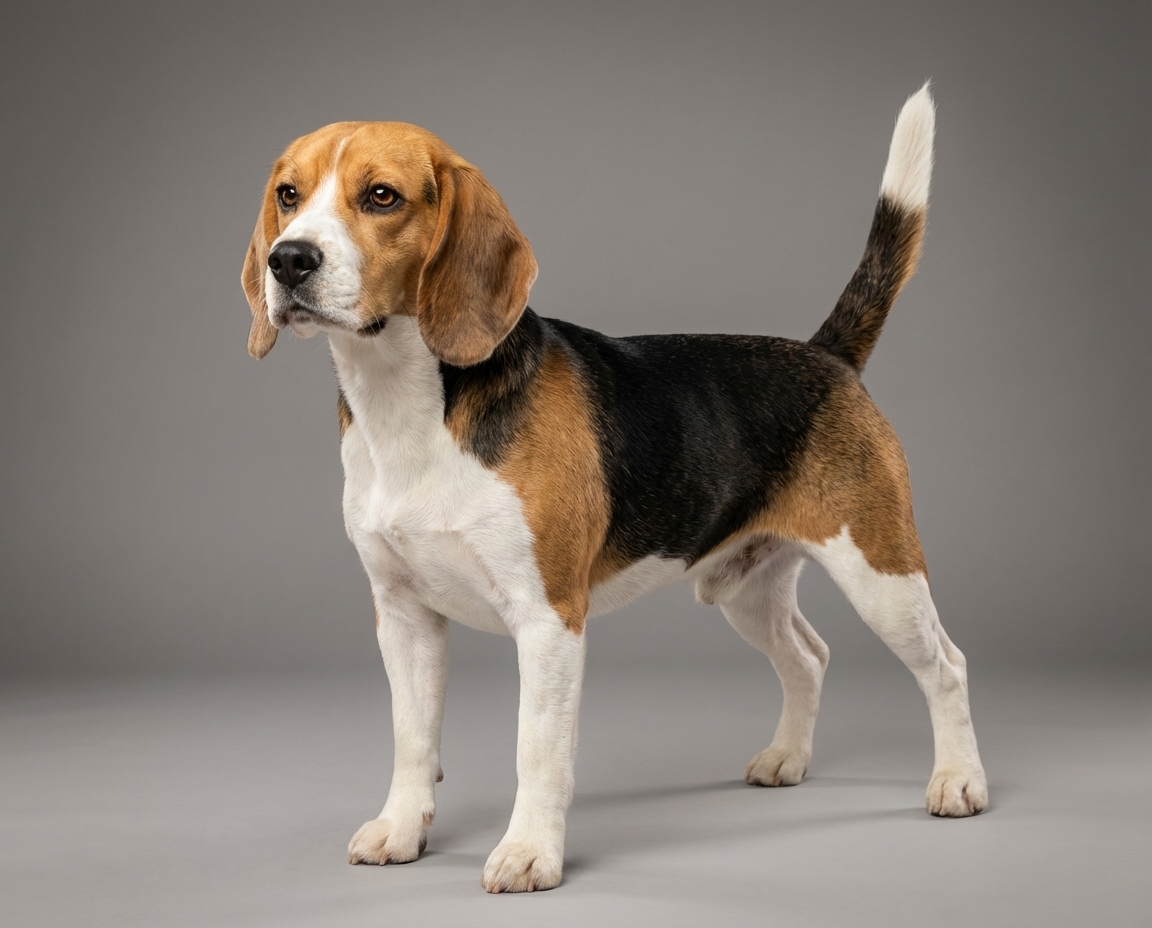
Hound breed from England
The Beagle is a medium-sized hound breed originating in England. It has a short, dense, smooth coat and is known for its friendly, gentle, alert, outgoing, curious, and energetic temperament. Beagles are scent hounds, originally bred for hare hunting in packs, and they have a distinctive baying voice. Their size is estimated: males and females typically weigh between 9 and 14 kg and stand 33 to 41 cm tall. Lifespan is estimated at 10 to 15 years. Beagles are generally good with children and other dogs, but individual behavior varies. They have high energy (score 4 out of 5) and moderate trainability (score 3). Grooming needs are low (score 2), but shedding is high (score 4). They are less suited to apartment living (score 2). Recognition status varies by registry.
The Beagle was developed in Great Britain around the 1830s from various English hounds. It was bred as a 'foot hound' for hare hunting, with hunters following on foot rather than horseback. The breed's history is rooted in pack hunting, where its keen sense of smell and baying voice were essential. The modern Beagle's exact ancestry is not fully documented, but it is known to have originated in England and belongs to the Hound group. Its recognition status differs among kennel clubs and registries.
Breed tendencies are general guidance. Individual behavior depends on genetics, socialization, training, health and environment.
Higher daily exercise demand
Moderate compared with other breeds
Lower coat-maintenance demand
Higher shedding tendency
Supervise every dog–child interaction.
Introductions and socialization still matter.
Exercise, enrichment and noise tolerance affect fit.
Modelled tendency · medium confidence
A general morphology-based tendency. Individual dogs still require shade, shelter, water, acclimation and weather-appropriate activity. Method: climate-morphology-v1.
No Beagle-specific screening programme or peer-reviewed disorder-prevalence study is currently attached to this profile. This is not evidence that the breed has no health risks. Owners should use routine preventive veterinary care and discuss screening appropriate to the individual dog's history, examination and family line.
Veterinary disclaimer: This profile is educational and does not replace examination, diagnosis or treatment by a veterinarian.
Reviewed feeding guidance will appear after an approved source is imported and editorially reviewed.
Compare male and female growth, check weight by age and estimate mature size.
Preview only. Open the complete chart to adjust age, current weight and measurement units.
Beagles are medium-sized dogs. Estimated adult weight for both males and females is 9 to 14 kg, and height is 33 to 41 cm. Estimated lifespan is 10 to 15 years. These are modelled estimates, not exact guarantees.
Beagles are described as friendly, gentle, alert, outgoing, curious, and energetic. However, individual temperaments can vary. They are generally good with children and other dogs, but early socialization is recommended.
Beagles have high energy (score 4 out of 5). They require regular exercise, such as daily walks or playtime, to stay healthy and happy. Without enough activity, they may become restless.
Grooming needs are low (score 2). Their short, dense, smooth coat requires occasional brushing. However, shedding is high (score 4), so regular vacuuming may be needed.
Beagles are less suited to apartment living (score 2). They have high energy and a tendency to bark or bay, which may not be ideal in close quarters. A home with a yard is often better.
The Beagle originated in England. It was developed in Great Britain around the 1830s from various English hounds, bred as a foot hound for hare hunting.
Beagles have moderate trainability (score 3). They are intelligent but can be independent due to their hound instincts. Consistent, positive reinforcement methods work best.
Image source: The Dog API. Last reviewed 7/20/2026.