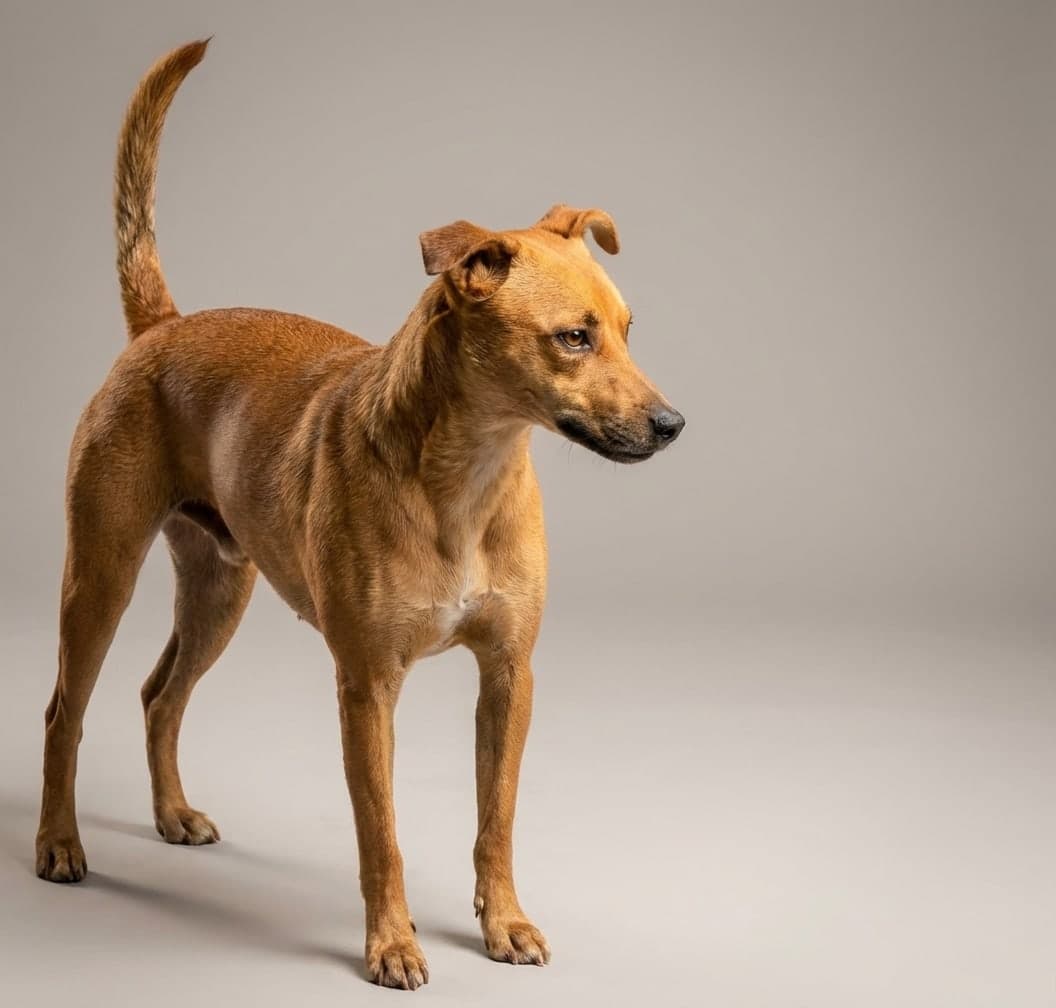
medium · Primitive
Compare their size, temperament, care needs, health evidence and household fit using published structured data.
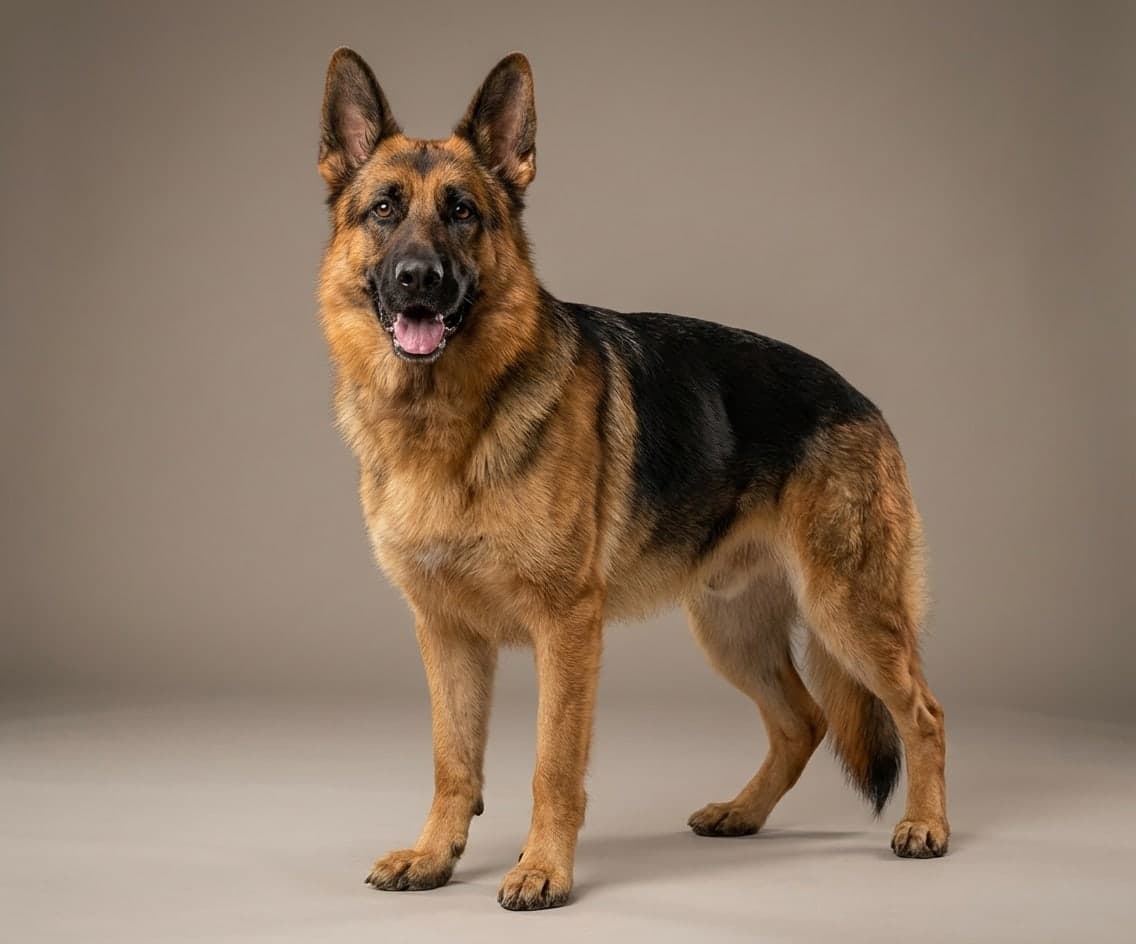
The Africanis and German Shepherd Dog (GSD) are both intelligent, loyal breeds, but they differ greatly in history, build, and purpose. The Africanis is a primitive, medium-sized landrace from Southern Africa, valued for its adaptability and independence. The GSD, a large herding breed from Germany, is renowned for its trainability and protective nature. While both have high energy and moderate shedding, their temperaments and care needs diverge. This comparison explores their size, temperament, family suitability, training, exercise, grooming, health, feeding, and environment to help potential owners choose based on lifestyle and experience.
Quick verdict: The Africanis suits experienced owners seeking an independent, low-maintenance companion, while the German Shepherd is ideal for active families or working roles requiring high trainability. Neither breed is universally superior; choice depends on owner experience, living space, and activity level. The Africanis may adapt better to warm climates, whereas the GSD thrives in cooler conditions.
Scores summarize breed-level tendencies on the documented 1–5 methodology. They do not predict an individual dog’s behavior or health.
| Characteristic | Africanis | German Shepherd |
|---|---|---|
| Size category | medium | large |
| Male weight | 25-34 kg | 29-41 kg |
| Female weight | 25-34 kg | 29-41 kg |
| Male height | 50-60 cm | 61-66 cm |
| Female height | 50-60 cm | 61-66 cm |
| Lifespan | 10–15 years | 9–13 years |
| Breed group | Primitive | Herding |
| Energy | 4/5 | 4/5 |
| Trainability | 3/5 | 5/5 |
| Grooming | 1/5 | 3/5 |
| Shedding | 3/5 | 4/5 |
| Child suitability | 3/5 | 4/5 |
| Dog compatibility | 3/5 | 3/5 |
| Apartment suitability | 2/5 | 5/5 |
| Origin | Southern Africa | Germany |
| Coat types | Short | Medium, Dense, Straight |
| Coat colors | Varies widely | black, bordeaux |
| Temperament | Africanis | German Shepherd |
|---|---|---|
| Imported traits | Intelligent, loyal, alert, adaptable, independent | Confident, courageous, intelligent, loyal, protective |
The Africanis is a medium-sized breed, with males and females both weighing 25–34 kg and standing 50–60 cm tall. In contrast, the German Shepherd is larger, with males and females weighing 29–41 kg and standing 61–66 cm. This size difference means the GSD requires more space and may be more imposing, while the Africanis is more compact and potentially easier to manage in smaller homes.
| Characteristic | Africanis | German Shepherd |
|---|---|---|
| Male weight | 25-34 kg | 29-41 kg |
| Female weight | 25-34 kg | 29-41 kg |
| Male height | 50-60 cm | 61-66 cm |
| Female height | 50-60 cm | 61-66 cm |
| Body structure | Source data required | Source data required |
| Coat type | Short | Medium, Dense, Straight |
| Coat length | Source data required | Source data required |
| Coat colors | Varies widely | black, bordeaux |
Both breeds are intelligent and loyal, but the Africanis is described as independent and adaptable, while the German Shepherd is confident, courageous, and protective. The Africanis's independence may appeal to owners who want a dog that can entertain itself, but it may also be less eager to please. The GSD's protective nature makes it an excellent watchdog, but it requires consistent socialization to avoid over-guarding.
| Characteristic | Africanis | German Shepherd |
|---|---|---|
| Imported temperament | Intelligent, loyal, alert, adaptable, independent | Confident, courageous, intelligent, loyal, protective |
| Friendly / affectionate | Not separately scored | Not separately scored |
| Alert / protective | alert | protective |
| Independent / courageous | independent | courageous |
| Stranger friendliness | Source data required | Source data required |
| Sensitivity | Source data required | Source data required |
The German Shepherd has a child suitability score of 4 (out of 5), indicating good compatibility with children, while the Africanis scores 3. Both breeds have a dog compatibility score of 3, suggesting moderate tolerance of other dogs. The GSD's higher child suitability may stem from its herding background and trainability, but individual temperaments vary. The Africanis's independent streak might make it less patient with young children.
| Characteristic | Africanis | German Shepherd |
|---|---|---|
| Families | 3/5 child score | 4/5 child score |
| Young children | 3/5; supervision required | 4/5; supervision required |
| Older children | 3/5 | 4/5 |
| Seniors | No dedicated score | No dedicated score |
| First-time owners | 3/5 trainability | 5/5 trainability |
| Multi-dog homes | 3/5 | 3/5 |
| Homes with cats | Source data required | Source data required |
| Single-person households | Assess exercise and alone-time needs | Assess exercise and alone-time needs |
The German Shepherd scores a perfect 5 for trainability, reflecting its eagerness to learn and work. The Africanis scores 3, indicating moderate trainability, likely due to its independent nature. GSDs excel in obedience and complex tasks, making them ideal for service roles. Africanis owners may need more patience and positive reinforcement to achieve reliable recall and commands.
| Characteristic | Africanis | German Shepherd |
|---|---|---|
| Trainability | 3/5 | 5/5 |
| Intelligence | Not separately measured | Not separately measured |
| Obedience | Not separately measured | Not separately measured |
| Stubbornness | Source data required | Source data required |
| Attention span | Source data required | Source data required |
| Early training | Start early and remain consistent | Start early and remain consistent |
| Socialization | Early, controlled positive exposure | Early, controlled positive exposure |
| Training style | Reward-based; adapt to individual | Reward-based; adapt to individual |
Both breeds have an energy score of 4 (out of 5), meaning they require substantial daily exercise. However, the GSD's working heritage often demands structured activities like agility or herding, while the Africanis may be satisfied with free running in a secure area. Without adequate exercise, both breeds may develop behavioral issues, but the GSD's higher trainability can make structured exercise easier to implement.
| Characteristic | Africanis | German Shepherd |
|---|---|---|
| Energy score | 4/5 | 4/5 |
| Daily exercise | Higher general demand | Higher general demand |
| Walking time | Individual plan required | Individual plan required |
| Play and mental stimulation | High priority | High priority |
| Running / hiking | Veterinary and maturity assessment | Veterinary and maturity assessment |
| Puppies | Short age-appropriate sessions | Short age-appropriate sessions |
| Seniors | Adapt to health and mobility | Adapt to health and mobility |
The Africanis has a short coat and a grooming score of 1, indicating minimal maintenance. The German Shepherd has a medium, dense, straight coat and a grooming score of 3, requiring regular brushing to manage shedding. The GSD also has a higher shedding score (4 vs. 3), so it may not be ideal for allergy sufferers. The Africanis's low grooming needs are a clear advantage for low-maintenance owners.
| Characteristic | Africanis | German Shepherd |
|---|---|---|
| Grooming need | 1/5 | 3/5 |
| Shedding | 3/5 | 4/5 |
| Brushing | Routine | Routine |
| Bathing | As coat and lifestyle require | As coat and lifestyle require |
| Seasonal shedding | Not separately documented | Not separately documented |
| Professional grooming | Breed/coat dependent | Breed/coat dependent |
| Estimated cost | Requires owner location and provider data | Requires owner location and provider data |
These records identify conditions or screenings reported by configured sources. They do not mean every dog will develop a condition, and absence from this table does not establish that a breed has no risk.
Joint, eye, heart and genetic-testing guidance appears only when an approved health source explicitly supports it. Discuss breed-specific screening and symptoms with a veterinarian.
Both breeds require a complete diet appropriate to life stage, with monitoring of body condition. The Africanis is medium-sized with no obesity tendency noted, while the GSD is large and requires a large-breed puppy diet to support growth. Portion sizes should be adjusted individually; breed alone cannot determine fixed amounts. The GSD's larger size may mean higher food costs.
| Characteristic | Africanis | German Shepherd |
|---|---|---|
| Feeding profile | Choose a complete diet appropriate to life stage, monitor body condition and adjust intake for the individual dog's activity and veterinary needs. Breed name alone cannot determine a fixed portion. | Choose a complete diet appropriate to life stage, monitor body condition and adjust intake for the individual dog's activity and veterinary needs. Breed name alone cannot determine a fixed portion. |
| Obesity tendency | Not available | Not available |
| Large-breed puppy | No / not flagged | Yes |
| Feeding frequency | Depends on life stage | Depends on life stage |
| Typical calories | Use individual calorie calculation | Use individual calorie calculation |
The Africanis has a balanced climate profile (hot, cold, humid all score 3), reflecting its origins in Southern Africa. The German Shepherd scores 1 for hot climates, 5 for cold, and 2 for humid, indicating it is poorly suited to heat but thrives in cold. The GSD's double coat provides insulation, while the Africanis's short coat offers moderate tolerance. Owners in warm regions may prefer the Africanis.
| Characteristic | Africanis | German Shepherd |
|---|---|---|
| Apartment suitability | 2/5 | 5/5 |
| House suitability | Depends on daily care capacity | Depends on daily care capacity |
| Yard requirement | A yard does not replace exercise | A yard does not replace exercise |
| Hot climate | 3/5 | 1/5 |
| Cold climate | 3/5 | 5/5 |
| Noise level | Source data required | Source data required |
| Tolerance for being alone | Source data required | Source data required |
| Space requirement | medium | large |
Purchase, adoption, veterinary, insurance, training and grooming costs vary significantly by country, city, provider and the individual dog. No defensible location-based source is configured yet, so this comparison does not publish invented currency ranges.
| Characteristic | Africanis | German Shepherd |
|---|---|---|
| Puppy purchase | Local ethical-source data required | Local ethical-source data required |
| Adoption | Local rescue data required | Local rescue data required |
| Food | medium-size baseline; calculate locally | large-size baseline; calculate locally |
| Grooming | 1/5 demand | 3/5 demand |
| Veterinary care | Individual and local | Individual and local |
| Insurance | Location and policy required | Location and policy required |
| Training | Provider and needs dependent | Provider and needs dependent |
| Equipment | medium equipment | large equipment |
| Annual cost | Local calculator/source required | Local calculator/source required |
Growth pages scale the imported adult endpoints using the documented size-category model. They are educational estimates rather than observed puppy cohorts. Follow each breed’s chart for age-by-age values and an interactive adult-size estimate.
| Characteristic | Africanis | German Shepherd |
|---|---|---|
| Adult weight | 25–34 kg | 29–41 kg |
| Adult height | 50–60 cm | 61–66 cm |
| Growth speed | medium model | large model |
| Full height | See modeled chart | See modeled chart |
| Adult weight reached | See modeled chart | See modeled chart |
| Sex differences | Separate male/female endpoints | Separate male/female endpoints |
Every point above is derived from the displayed structured scores. A low score is not automatically a flaw, and a high score is not automatically an advantage.
Choose based on the individual dog, ethical sourcing or rescue assessment, household capacity, training commitment and veterinary needs—not a single score.
Adjust eight household preferences. The result recalculates only from the comparison’s documented size, care, suitability and climate scores.
This is decision support, not a universal recommendation. Individual temperament, health, availability and responsible sourcing still matter.
The Africanis is described as independent and adaptable, while the German Shepherd is confident and protective but more people-oriented. The Africanis may be more self-sufficient.
The German Shepherd has a child suitability score of 4 out of 5, while the Africanis scores 3. Both can be good with children if properly socialized, but the GSD is generally more tolerant.
The German Shepherd has a shedding score of 4, higher than the Africanis's 3. GSDs shed heavily, especially seasonally, while Africanis shedding is moderate.
The German Shepherd scores 5 for trainability, the highest possible, while the Africanis scores 3. GSDs are eager to please and excel in obedience; Africanis may be more stubborn.
The German Shepherd has an apartment suitability score of 5, while the Africanis scores 2. Despite its size, the GSD can adapt to apartments if exercised adequately, whereas the Africanis may need more space.
No specific health conditions are listed in the evidence for either breed. German Shepherds are commonly prone to hip dysplasia, but this is not confirmed by the data. Africanis may have fewer genetic issues due to diverse lineage.
The Africanis has an estimated lifespan of 10–15 years, while the German Shepherd lives 9–13 years. On average, Africanis may have a slightly longer lifespan.
The Africanis has a grooming score of 1 (minimal), while the German Shepherd scores 3 (moderate). GSDs require regular brushing to manage shedding, whereas Africanis needs occasional brushing.
The Africanis has a hot climate score of 3, while the German Shepherd scores 1. The Africanis is more tolerant of heat due to its short coat and origins, whereas GSDs are prone to overheating.
Both breeds have a dog compatibility score of 3 out of 5, indicating moderate tolerance. Early socialization is important for both to ensure positive interactions with other dogs.
This page compares structured values already stored for each breed. It does not generate new factual claims from the breed names. Missing values remain unavailable rather than being invented.
AI-assisted interpretation: deepseek-chat · prompt comparison-evidence-v1 · generated 19/07/2026. DeepSeek receives the structured evidence packet only; the tables remain database-driven.