Adult data importedAge ranges are modeled
English Toy Terrier (Black & Tan)
Growth Chart
Follow typical puppy weight from eight weeks to adulthood, compare male and female ranges, and estimate adult size.
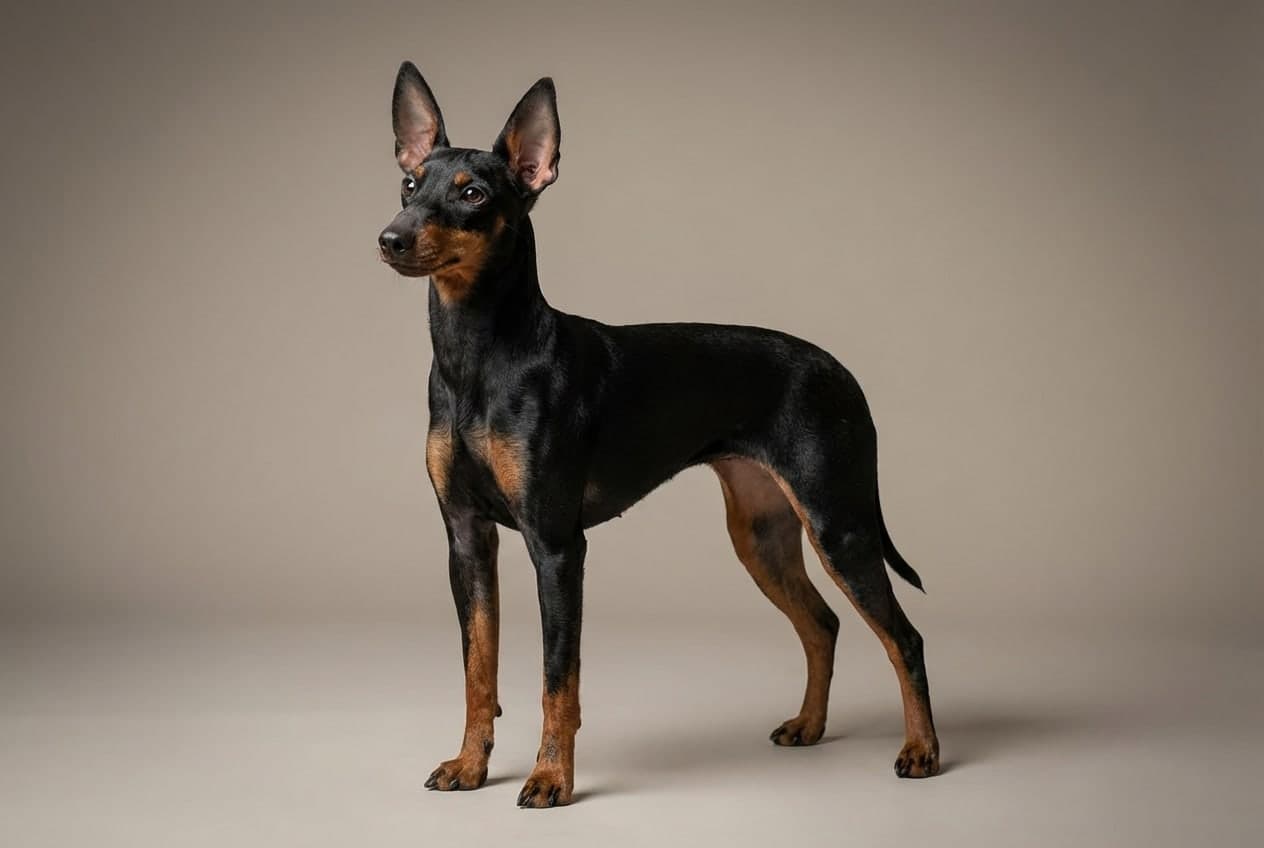
toy breedAdult size around 12 months
Veterinary note: Growth charts are educational estimates. Contact a veterinarian about sudden weight loss, stalled growth, pain or abnormal body condition.
At a glance
Quick growth summary
Interactive chart
Weight growth over time
Compare modeled male and female curves and place your puppy’s measurement on the chart.
● Male modeled midpoint● Female modeled midpoint● Your puppy
6-month comparison: 2.6 kg is within the broad modeled English Toy Terrier (Black & Tan) range of 2.2–3.0 kg. This does not assess health.
Modeled reference
English Toy Terrier (Black & Tan) weight by age
Age ranges are scaled from imported adult endpoints.
| Age | Male minimum | Male maximum | Female minimum | Female maximum | Adult size |
|---|---|---|---|---|---|
| 2 months | 0.8 kg | 1.1 kg | 0.8 kg | 1.1 kg | 31% |
| 3 months | 1.2 kg | 1.7 kg | 1.2 kg | 1.7 kg | 46% |
| 4 months | 1.6 kg | 2.2 kg | 1.6 kg | 2.2 kg | 61% |
| 5 months | 2.0 kg | 2.6 kg | 2.0 kg | 2.6 kg | 73% |
| 6 months | 2.2 kg | 3.0 kg | 2.2 kg | 3.0 kg | 82% |
| 8 months | 2.5 kg | 3.3 kg | 2.5 kg | 3.3 kg | 92% |
| 10 months | 2.6 kg | 3.5 kg | 2.6 kg | 3.5 kg | 97% |
| 12 months | 2.7 kg | 3.6 kg | 2.7 kg | 3.6 kg | 100% |
| 18 months | 2.7 kg | 3.6 kg | 2.7 kg | 3.6 kg | 100% |
| 24 months | 2.7 kg | 3.6 kg | 2.7 kg | 3.6 kg | 100% |
Modeled estimates—not observed measurements or official growth requirements.
Sex differences
Male and female growth
Imported adult range
2.7–3.6 kg25–30 cm
- Fastest gain occurs in puppyhood.
- Height stabilizes before muscle.
- Monitor trends, not one reading.
Imported adult range
2.7–3.6 kg25–30 cm
- Adult ranges can overlap.
- Genetics affect final size.
- Pair weight with body condition.
Interactive estimate
English Toy Terrier (Black & Tan) adult-size estimate
Enter current age and weight. The calculator uses the same size-based curve as the chart.
Estimated adult weight2.4 kg
Broad estimate: 2.2–2.7 kg
82%modeled growth
Educational estimate only—not a veterinary assessment.
Development timeline
Puppy growth stages
Stage 1Socialization2–3 months
Growth
Rapid learning and coordination.
Feeding & exercise
Measured meals and gentle play.
Health
Record growth and discuss unusual changes with a veterinarian.
Stage 2Juvenile3–6 months
Growth
Height and limbs develop quickly.
Feeding & exercise
Gradual training; avoid forced impact.
Health
Record growth and discuss unusual changes with a veterinarian.
Stage 3Adolescent6–12 months
Growth
Growth slows as strength increases.
Feeding & exercise
Consistent portions and vet checks.
Health
Record growth and discuss unusual changes with a veterinarian.
Stage 4Young adult12–12 months
Growth
Frame and muscle mature.
Feeding & exercise
Transition care with veterinary guidance.
Health
Record growth and discuss unusual changes with a veterinarian.
Stage 5Mature12+ months
Growth
Adult structure stabilizes.
Feeding & exercise
Adjust calories to activity.
Health
Record growth and discuss unusual changes with a veterinarian.
Healthy development
Factors affecting growth
Parents and breed lines influence size.
Balanced food supports controlled growth.
Adult ranges may differ.
Age-appropriate movement builds coordination.
Illness and parasites can disrupt growth.
Steady growth
Healthy signs
- Gradual weight gain
- Visible waist
- Ribs easy to feel
- Comfortable movement
- Normal appetite
- Consistent energy
Veterinary review
Warning signs
- Sudden loss or gain
- Stalled growth
- Limping or pain
- Digestive problems
- Marked lethargy
- Abnormal condition
Internal comparisons
Similar-size breeds
English Toy Terrier (Black & Tan) vs Australian Silky Terrier
Compare size, temperament, care and household suitability.
Open comparison →English Toy Terrier (Black & Tan) vs Biewer Terrier
Compare size, temperament, care and household suitability.
Open comparison →English Toy Terrier (Black & Tan) vs Bolognese
Compare size, temperament, care and household suitability.
Open comparison →English Toy Terrier (Black & Tan) vs Chihuahua
Compare size, temperament, care and household suitability.
Open comparison →Common questions
English Toy Terrier (Black & Tan) growth FAQs
How much should a English Toy Terrier (Black & Tan) puppy weigh?
Use the table as a broad modeled range. Age, sex, genetics, nutrition and body condition all matter.
When is a English Toy Terrier (Black & Tan) fully grown?
English Toy Terrier (Black & Tan) dogs commonly approach adult size around 12 months, though muscle can continue developing.
Are male and female English Toy Terrier (Black & Tan) dogs different in size?
Imported adult ranges are 2.7–3.6 kg for males and 2.7–3.6 kg for females.
Is the calculator exact?
No. It is an educational size-curve estimate, not a diagnosis or guarantee.
Transparency
Sources and methodology
Adult weight, height and lifespan use structured database values.
A size curve scales adult endpoints; values are not observed.
Individual puppies may grow differently.
Recheck when source data or methods change.