✓ Verified · Reviewed datavaries by registry
Bloodhound
Hound breed from Belgium
Breed overview
Reviewed · Database recordAbout the Bloodhound
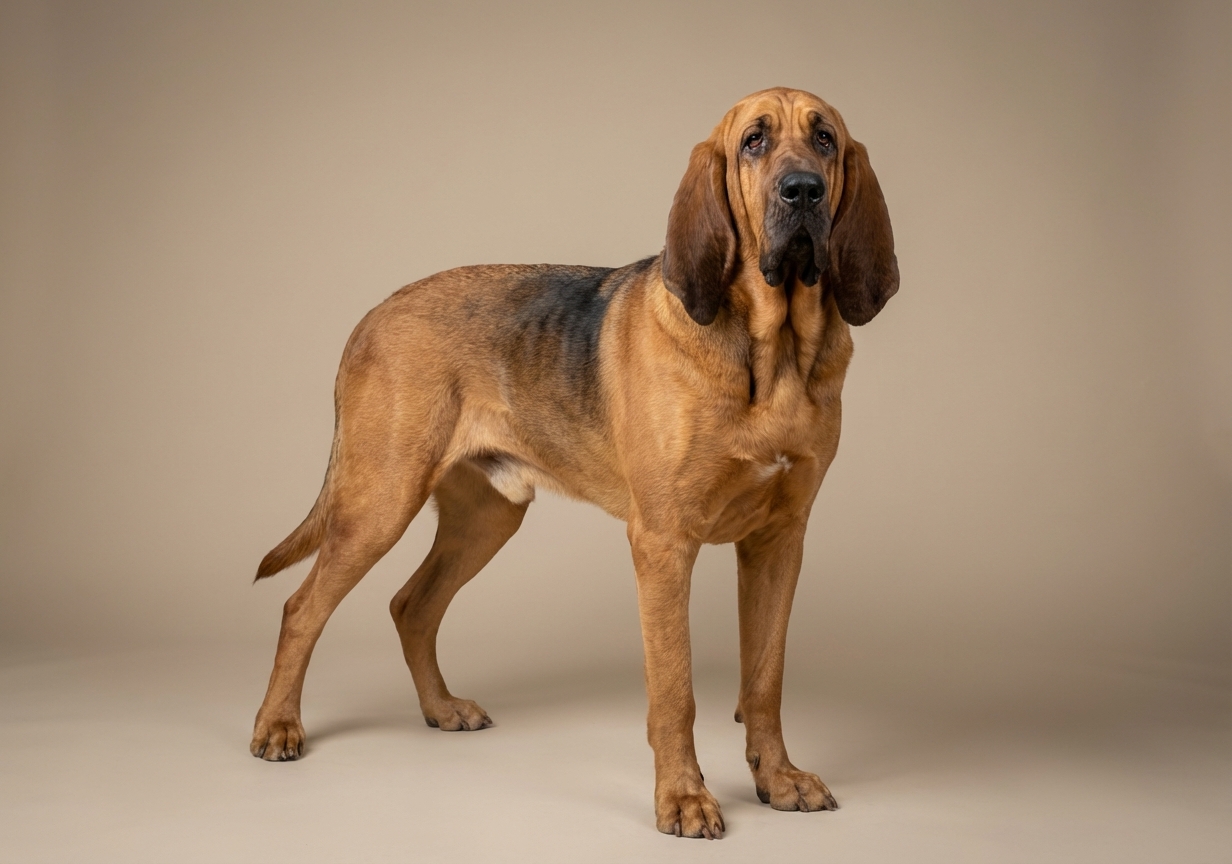
The Bloodhound is a large, substantial scent hound with a noble, dignified expression. It is characterized by an exceptional tracking ability, a distinctive wrinkled face, long drooping ears, loose skin, and pendulous jowls. The breed is renowned for its extraordinary sense of smell and unparalleled tracking abilities. Bloodhounds are generally gentle, friendly, independent, alert, devoted, and affectionate, though individual temperaments can vary. They have a short, smooth coat and are classified in the Hound group. Their size is large: estimated adult weight ranges from 41 to 50 kg for both sexes, and estimated adult height ranges from 64 to 69 cm for both sexes. The estimated lifespan is 10 to 12 years. Energy level is moderate (3 out of 5), trainability is low (2 out of 5), grooming needs are low (2 out of 5), and shedding is moderate (3 out of 5). They are rated highly for child suitability (4 out of 5) and moderately for dog compatibility (3 out of 5), but are less suited to apartment living (2 out of 5). Recognition status varies by registry.
Quick facts
Bloodhound at a glance
Sizelarge
Breed groupHound
OriginBelgium
Lifespan10–12 years
Male weight41–50 kilogram
Female weight41–50 kilogram
Male height64–69 centimetre
Female height64–69 centimetre
Origin and history
Where the breed comes from
The Bloodhound is an ancient breed developed by monks at the Abbey of Saint-Hubert in Belgium and France during medieval times. Its origins are in Belgium, and it was later refined in England. The breed has been valued for centuries for tracking game and people. Eventually, Bloodhounds were imported to the United States for search and rescue work. The exact timeline of these developments is not precisely documented, but the breed's history is deeply tied to monastic breeding programs and later English refinement. It is important to note that many details of its early history are based on tradition and may not be fully verified.
Physical characteristics
Structured dataSize, build and coat
Female
41–50 kilogramAdult weight64–69 centimetreAdult heightCoat typesShort, SmoothCoat colorsPendingRecognitionvaries by registryData methodai assisted draft
Temperament
Typical breed tendencies
Gentlefriendlyindependentalertdevotedaffectionate
Breed tendencies are general guidance. Individual behavior depends on genetics, socialization, training, health and environment.
Exercise, training and maintenance
1–5 methodologyDaily care profile
Moderate compared with other breeds
May require patient training
Lower coat-maintenance demand
Moderate compared with other breeds
Family suitability
Home and household fit
Supervise every dog–child interaction.
Introductions and socialization still matter.
Exercise, enrichment and noise tolerance affect fit.
Climate suitability
Modelled tendency · low confidence
Modelled tendency · low confidence
Modelled tendency · low confidence
A general morphology-based tendency. Individual dogs still require shade, shelter, water, acclimation and weather-appropriate activity. Method: climate-morphology-v1.
Health overview
Veterinary sources requiredHealth considerations
No Bloodhound-specific screening programme or peer-reviewed disorder-prevalence study is currently attached to this profile. This is not evidence that the breed has no health risks. Owners should use routine preventive veterinary care and discuss screening appropriate to the individual dog's history, examination and family line.
Feeding overview
Nutrition and feeding
Research in progress
Reviewed feeding guidance will appear after an approved source is imported and editorially reviewed.
Decision support
Potential advantages and challenges
Potential advantages
- Can be a strong family match when socialized and supervised.Supported by childSuitability: 4
Potential challenges
Similar breeds
Continue comparing
Related comparisons
Compare this breed
Growth chart
Bloodhound puppy growth
Modeled estimates
Open interactive chart From puppy weight to adult size
Compare male and female growth, check weight by age and estimate mature size.
Adult male weight41–50 kilogramAdult female weight41–50 kilogramGrowth modeladult-range-size-model-v1
Preview only. Open the complete chart to adjust age, current weight and measurement units.
Frequently asked questions
Common questions
What is the size and lifespan of a Bloodhound?
Bloodhounds are large dogs. Estimated adult weight for both males and females is 41 to 50 kg, and estimated adult height is 64 to 69 cm. Their estimated lifespan is 10 to 12 years. These figures are modelled estimates and may vary.
What is the Bloodhound's temperament like?
Bloodhounds are described as gentle, friendly, independent, alert, devoted, and affectionate. However, individual dogs may vary, and not every Bloodhound will display all these traits consistently.
How much exercise does a Bloodhound need?
Bloodhounds have a moderate energy level (rated 3 out of 5). They require regular exercise but are not excessively high-energy. Daily walks and opportunities to use their nose are beneficial.
What are the grooming requirements for a Bloodhound?
Grooming needs are low (rated 2 out of 5). Their short, smooth coat requires minimal brushing. Shedding is moderate (rated 3 out of 5). Regular cleaning of their facial wrinkles and ears is recommended to prevent irritation.
Is a Bloodhound a good fit for families with children?
Bloodhounds are rated highly for child suitability (4 out of 5). They are generally gentle and affectionate with children, but as with any breed, interactions should be supervised, and individual temperaments vary.
Can a Bloodhound live in an apartment?
Bloodhounds are less suited to apartment living (rated 2 out of 5) due to their large size and moderate energy needs. They do best in homes with a yard where they can roam and follow scents.
Where did the Bloodhound originate?
The Bloodhound originated in Belgium, developed by monks at the Abbey of Saint-Hubert in Belgium and France during medieval times. It was later refined in England and eventually imported to the US for search and rescue work.
Data transparency
✓ Published · VerifiedSources and review status
APIThe Dog API ↗The Dog API Terms of Service (effective 2023-07-01)
VETERINARY SOURCEWSAVA Global Nutrition Guidelines and Toolkit ↗Copyright; factual citation and original summary only
Image source: The Dog API. Last reviewed 7/20/2026.